Why Sitting Too Long Harms Your Muscles, Posture and Lower Back in 2026

Discover how sitting too long affects muscle health, posture, hip flexors, glutes and lower back pain, plus practical ways employers can reduce sedentary behaviour in 2026.
I am a professional massage therapist with a focus on anti-ageing strategies, musculoskeletal health and movement. This article forms part of our 2026 insight series on reducing sedentary behaviour and supporting better movement.
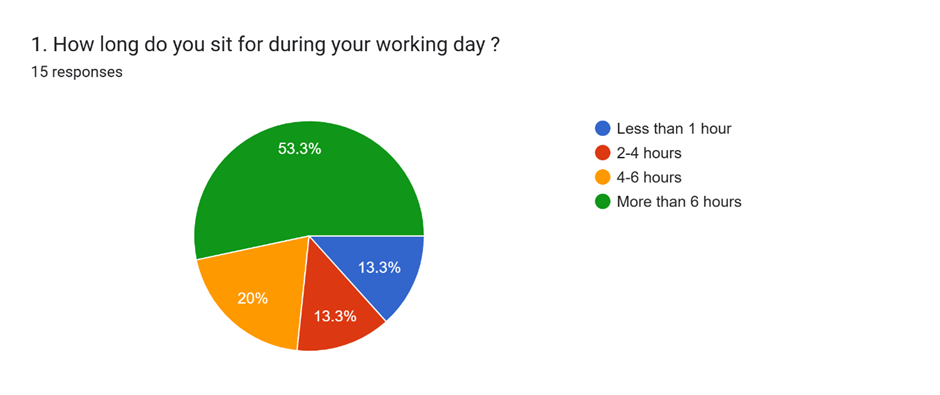
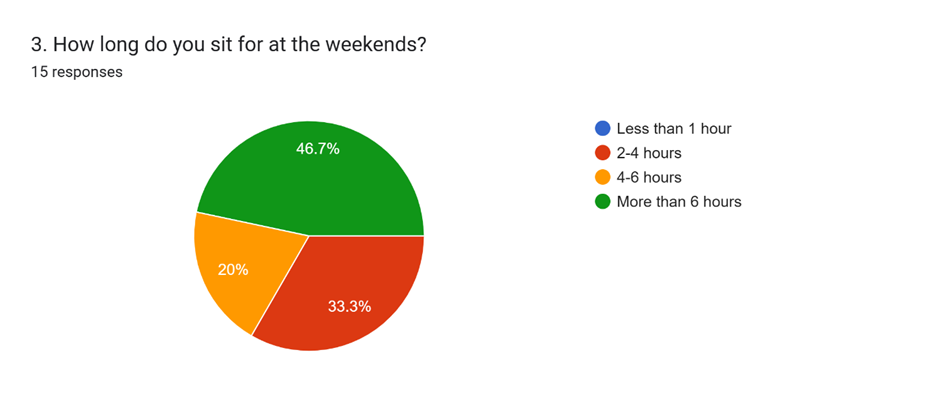
I recently conducted a small survey on people’s activity levels and some of the results appear in our FAQ section below.
Muscles, Biomechanics and the Hidden Cost of Sitting Too Long
For many people, sitting has become the default position for work, travel and downtime. But in 2026, the conversation around sedentary behaviour is no longer just about comfort. It is about long-term health, muscle function, posture, productivity and pain prevention. Current guidance from the World Health Organization recommends reducing sedentary time and replacing it with physical activity wherever possible, to sit less, move more and include regular muscle-strengthening activity each week. One question becomes more relevant than ever: what is prolonged sitting really doing to the body?
Why is sitting too long such a concern? Because prolonged sedentary behaviour is now strongly associated with poorer cardiovascular health, reduced metabolic function, lower daily energy expenditure, and a higher risk of chronic conditions including type 2 diabetes. Even people who exercise regularly may still experience the effects of extended sitting if most of the working day is spent seated.
One reason is muscle health. Skeletal muscles do far more than create movement. They help regulate blood sugar, support circulation and contribute to healthy metabolic function. When daily movement drops and muscles become underused, those protective systems do not perform as efficiently. Over time, the body becomes less adaptable, less resilient and more vulnerable to strain.
Why Prolonged Sitting Changes the Way the Body Works:
What Happens to Your Muscles When You Sit All Day?
Your body contains nearly 700 skeletal muscles, the muscles you consciously control. Together, they help you stay upright, generate force, move efficiently and stabilise the spine. The moment you sit down, that workload changes. Your legs and back contribute less, while your core must work harder to support the upper body. If your core is weak, tired or poorly conditioned, posture often starts to collapse. That can increase strain through the hips, spine and shoulders. The encouraging part is that this pattern is not permanent. Better posture awareness, stronger core support and regular movement breaks can all help reduce the effects.
The Biomechanics of Sitting: Hip Flexors, Glutes and Lower Back Strain
To understand why sitting affects comfort and movement so quickly, it helps to look at basic biomechanics. Many muscles work in antagonistic pairs, where one group contracts while the opposing group lengthens. That relationship creates balance, control and efficient movement throughout the body.
Take for instance the hip flexor/ glute muscles pairing. When you sit for long periods, the hips remain in a flexed position. Over time, the hip flexors at the front of the body can become tight and shortened, while the glutes at the back become less active and weaker ( see the illustration below) This common muscle imbalance is one reason prolonged sitting is so often linked to lower back pain, reduced hip mobility and poor posture. It can also affect how you stand, walk, lift and recover after exercise, because the body starts adapting to stillness rather than movement.

The lower back is a good example. When tight hip flexors and underactive glutes stop supporting the pelvis and spine effectively, the lower back often takes the extra load. As that continues, posture can change, the natural lumbar curve may become less supported, and surrounding tissues can become irritated or overloaded. The result can be persistent stiffness, recurring discomfort, reduced range of motion and the familiar feeling of being sore after ‘just sitting’ for too long.
For employers, this is more than a wellbeing issue. It can affect energy, concentration, comfort and long-term musculoskeletal health across the workforce.
In practice, the pattern is easy to recognise. People in sedentary roles often describe the same cluster of issues: tight hips, weak glutes, lower back discomfort, poor posture and reduced mobility. More active workers may still experience aches and pains, but they are usually shaped by task demands rather than the predictable biomechanical effects of prolonged sitting. That distinction matters, because it shows that many desk-based issues are not random. They are preventable.
The 2026 Takeaway
The message for 2026 is simple: sitting itself is not the enemy, but staying still for too long is. The body responds best to variety, movement and regular muscular demand. For individuals, that means building more movement into the day. For employers, it means creating environments where healthy movement is normal, not occasional. The organisations that act on that now will be better placed to support healthier people, stronger performance and more sustainable wellbeing over time.
Frequently Asked Questions About Sitting Too Long, Posture and Lower Back Pain
Why is sitting too long bad for your health?
Prolonged sitting is a form of sedentary behaviour, and higher levels of sedentary time are associated with increased health risks in adults. Guidance from the World Health Organization recommends limiting sedentary time and replacing it with physical activity where possible, to include muscle-strengthening activity each week. In practical terms, too much sitting can affect circulation, metabolic health, muscle function, posture and energy levels over time.
Can sitting too much cause lower back pain?
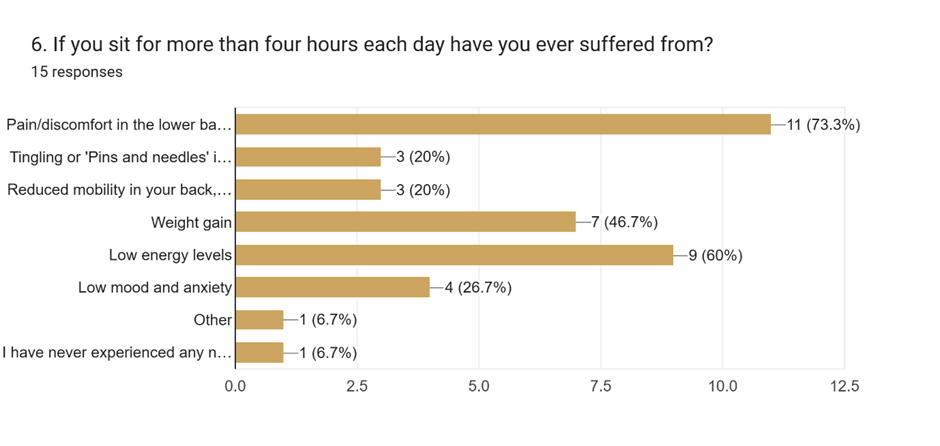
Sitting too much can contribute to lower back pain, especially when it becomes a daily pattern ( see the results of our survey below). Long periods of sitting may increase strain through the lower back, particularly if posture collapses, the hips stay flexed for too long, or the muscles that support the pelvis and spine become underactive. The NHS advises people with back pain to stay active and keep moving, as too much rest can make symptoms worse.
What happens to your hip flexors and glutes when you sit all day?
When you sit all day, the hips stay in a flexed position for long periods. Over time, that can leave the hip flexors feeling tight and shortened, while the glutes become less active. This common muscle imbalance can affect posture, reduce hip mobility and place more demand on the lower back during standing, walking and lifting. Regular movement, strength work and changes in position during the day can help offset this pattern.
How often should you take movement breaks when working at a desk?
There is no single rule that suits everyone, but the most helpful approach is to avoid staying in one position for too long. Even short, regular movement breaks can help reduce sedentary time, encourage circulation and support better posture. Standing up for a minute or two, walking briefly, stretching the hips, or changing workstation position can all help break up long periods of desk-based work.
Can you be physically active and still be too sedentary?
Yes. You can meet your weekly exercise targets and still spend too much of the day sitting. This is one reason sedentary behaviour is now treated as its own health issue rather than simply the opposite of exercise. The World Health Organization emphasises that adults should not only aim for regular physical activity but also reduce and break up time spent sitting.
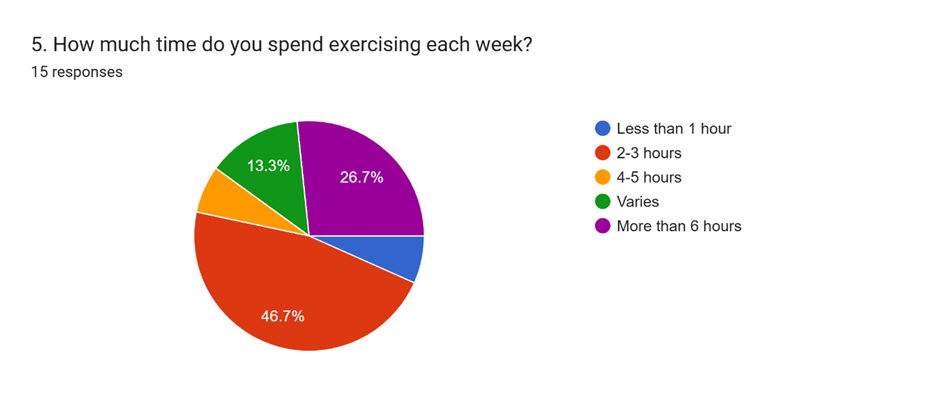
The results from our survey confirm this ( see below). Despite nearly half of our respondents exercising for 2-3 hours each week they spent over 6 hours sitting, during work and at the weekend. The common side-effects of sitting for long periods were lower back pain, weight gain and low energy levels
What is the best way to improve posture if you sit for long hours?
The best way to improve posture is usually a combination of awareness, movement and strength. Good sitting posture is easier to maintain when the core, hips and upper back are supported by regular activity. It also helps to adjust your seating setup, keep the feet supported, avoid slumping for long periods and change position often. Posture is less about holding one perfect position all day and more about creating variety and reducing prolonged strain.
Why should employers care about sedentary behaviour in the workplace?
Employers should care because prolonged sitting can affect comfort, concentration, musculoskeletal health and overall workplace wellbeing. A more movement-friendly working day may help reduce the predictable issues linked with desk-based work, such as lower back discomfort, tight hips and poor posture. Encouraging regular movement, varied working positions and practical wellbeing support can contribute to healthier, more productive teams.
Why Sitting Too Long Harms Your Muscles, Posture and Lower Back in 2026 | Generation Well 2026